Crown Reduction & Pruning in Rugby

Expert Crown Reduction & Pruning to BS3998 Standards

Crown reduction, thinning, lifting and deadwooding to BS3998 across Rugby.

From £200 per tree Most domestic crown reductions in Rugby fall £200–£800. Larger or multi-tree work upwards.

5.0★
Rating
Google verified
£5m+
Insurance
Public liability cover
BS3998
Standard
British tree work standard
CV21/22/23
Coverage
Rugby & surrounding villages

Every crown reduction job comes with…

  • Crown reduction, thinning, lifting and pollarding
  • BS3998 cuts at the branch collar
  • Deadwooding for safety in mature trees
  • Seasonal advice on the best pruning window
  • All arisings cleared and chipped on site

Crown reduction, thinning, lifting and deadwooding

Crown work covers four main techniques, each suited to a different problem. Pick the wrong one and you waste money or damage the tree; pick the right one and you get a balanced, healthy crown that solves the issue without compromising the tree’s biology.

  • Crown reduction: reducing the height and spread of the canopy by a measured percentage, with cuts back to suitable lateral branches. Used when a tree has outgrown its space, leans toward a structure, or has too much wind-sail.
  • Crown thinning: selectively removing a percentage of internal branches to reduce density without changing the outer shape. Used when a tree casts too much shade, blocks too much wind, or has internal congestion.
  • Crown lifting: removing lower branches to raise clearance over a fence, driveway or pavement. The most predictable of the four for a clear visible outcome.
  • Deadwooding: removing dead, dying or hung-up limbs from the canopy. Always sensible on mature trees as a safety check.
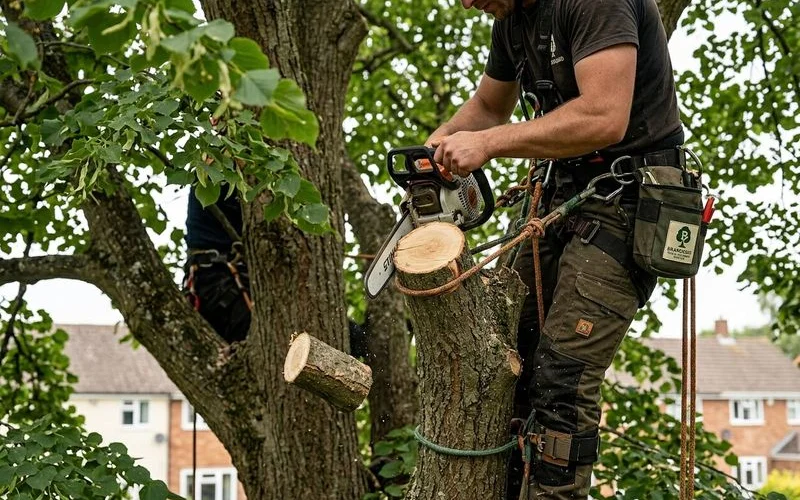
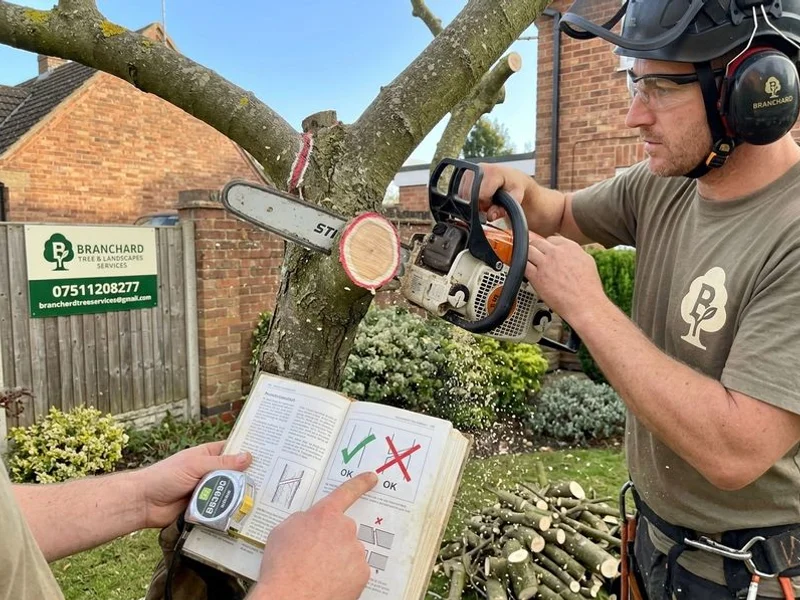
Climber making a target pruning cut at the branch collar on a Bilton lime, BS3998 detail

We’ll tell you on the site visit which technique suits the problem, and we won’t sell you a heavier prune than your tree needs.

BS3998 in practice: what proper cuts look like

The British Standard for tree work (BS3998:2010) sets out the technical detail for how cuts should be made. The two non-negotiables for our crown work:

  1. Cuts at the branch collar: the slight raised ring where a branch joins its parent stem. Cutting at the collar lets the tree compartmentalise the wound and seal it cleanly. Cutting flush, leaving a stub, or topping back to large heading cuts all damage the tree.
  2. Proportional reduction: no more than 25–30% of the crown removed in a single operation, with less on stressed or mature trees. If the tree needs more than that, we plan staged reductions over multiple years rather than one heavy prune.

We don’t top trees. We won’t sell a “30% off the top” prune that creates large heading cuts and weak regrowth. Where the tree’s structure genuinely doesn’t tolerate proportional reduction, we’ll discuss tree removal honestly instead.

Seasonal pruning windows for Rugby trees

Different species respond best to pruning at different times. The big windows:

  • Late winter dormancy (Jan–Feb): most deciduous broadleaves: oak, ash, beech, sycamore, lime. Reduces sap loss and pest exposure.
  • After leaf-out (June): sycamore and certain birches, where late-winter cuts can bleed heavily.
  • Summer (June–July): cherries, plums and other Prunus species, to avoid silver leaf disease entering through cut faces.
  • Autumn (Sep–Oct): selective deadwooding only, before winter wind exposes weakness.

We avoid heavy crown work during the nesting season (March–August), per the Wildlife & Countryside Act 1981. Where the work can’t wait, we check the canopy carefully for active nests before climbing and adjust the plan if any are found.
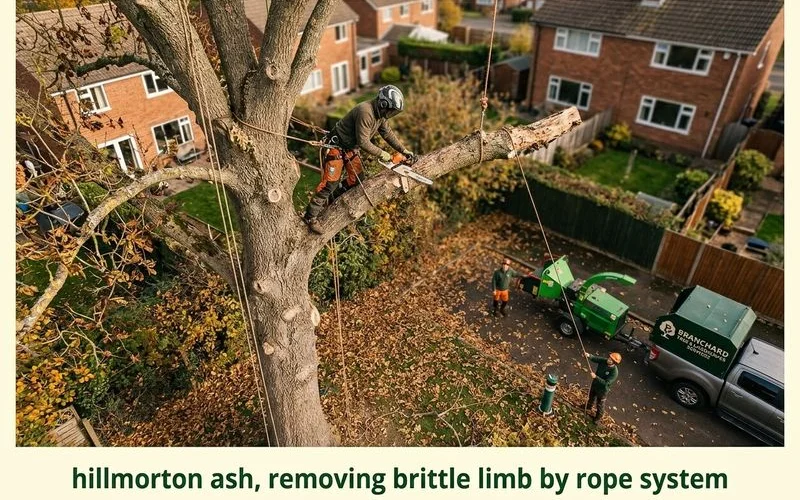
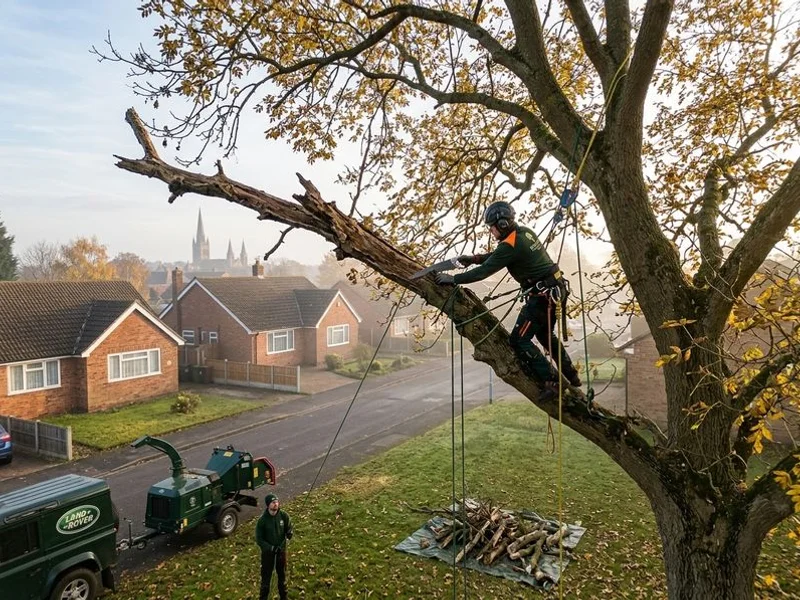
Deadwooding a mature Hillmorton ash, climber removing a brittle limb on a rope system

TPOs and Conservation Areas

Any significant pruning of a TPO’d tree, or a tree inside a Conservation Area, needs written consent from Rugby Borough Council before work starts. We check the register as part of every quote and manage the application end-to-end.

Common TPO patterns in our area: high frequency in Dunchurch around the green, scattered TPOs through Hillmorton’s 1930s housing on mature oaks and limes, Conservation Area coverage on most of Bilton’s older streets. We’ll tell you on the site visit whether your tree is affected.

Pricing for crown work in Rugby

Domestic crown work in Rugby usually runs:

  • Small tree, single technique (under 10m, basic prune): £200–£400
  • Medium tree, reduction or thinning (10–15m): £400–£700
  • Large mature tree, full reduction (15m+): £700–£1,200
  • Multi-tree work (e.g. row of limes lifted): quoted per visit, often discounted vs single-tree pricing

Pollarding (an even harder reduction technique used on specific species like willow and lime) is quoted separately and usually only continues an existing pollard regime, not started fresh on a previously natural tree.

Talk to a Rugby tree surgeon and landscaping team who’ll tell you straight which technique your tree actually needs.
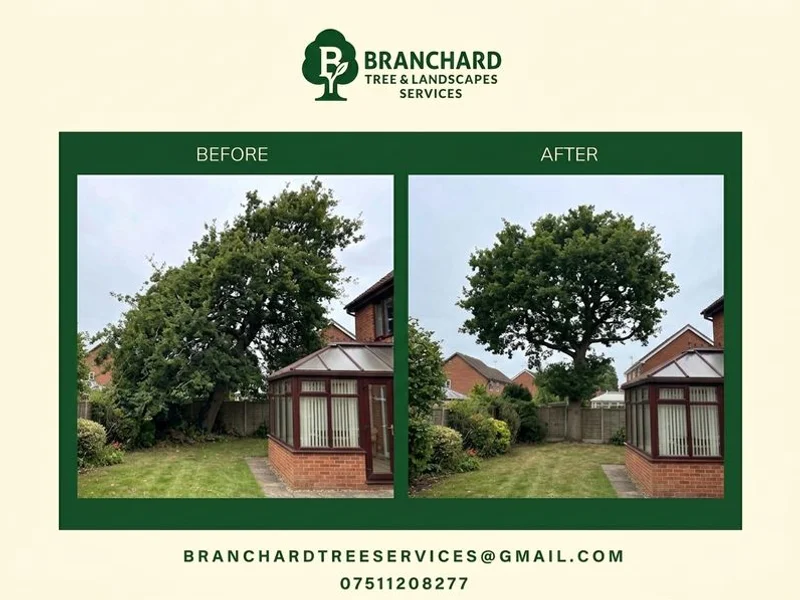
How crown reduction works with Branchard in Rugby

01

Tree assessment

We assess the tree's structure, health and how much can be removed safely.

02

Technique recommendation

We'll tell you whether reduction, thinning, lifting or deadwooding suits the problem.

03

BS3998 work

Cuts at the branch collar, proportional reduction, no topping. Climbers, ropes or MEWP as needed.

04

Tidy and aftercare

Arisings chipped, site cleared, and seasonal advice on watering or follow-up checks.

What does crown reduction cost in Rugby?

Typical range

£200 –£1,200

per tree

Most domestic crown reductions in Rugby fall £200–£800. Larger or multi-tree work upwards.

Get a free written quote

Why Rugby homeowners choose Branchard for crown reduction

BS3998 every cut

Cuts made at the branch collar, proportional reductions that respect tree biology, no topping.

Honest technique advice

We'll tell you when a thinning is the right call instead of a heavier reduction, or vice versa. We don't sell extra work.

Seasonal window guidance

Different species respond best to pruning at different times of year. We'll quote with the right window in mind.

Wildlife & nesting season

We work within the Wildlife & Countryside Act, checking for active nests during the March-August window before crown work.

Ready for a free written quote?

Free site visit. No obligation. Itemised quote within 48 hours, BS3998 compliant and fully insured.

Recent crown reduction jobs across Rugby

What customers say about our crown reduction work

★★★★★
"Honest crown reduction job, they advised against a heavier prune than the tree needed. Saved us money and the beech looks balanced and healthy."

Robert C.

Dunchurch

★★★★★
"Two large oaks reduced and deadwooded over two days. Tidy work, sensible recommendation on which limbs to keep, and the canopy is now in much better shape."

Helen M.

Bilton

★★★★★
"Crown lifted a row of limes along our drive, opened up the entrance beautifully and they handled the Conservation Area paperwork with the council."

David R.

Rugby

Crown Reduction FAQs

What's the difference between crown reduction, thinning and lifting?
Crown reduction shortens the entire crown by a measured percentage. Crown thinning removes a percentage of internal branches without changing the outer shape. Crown lifting removes lower branches to raise clearance over a fence, drive or pavement. Each suits a different problem. We'll explain which one fits your tree.
Is it true topping a tree is bad?
Yes. Topping (random heading cuts back to large stubs) damages tree biology, encourages weak regrowth, often leads to rot at the cut faces, and produces a worse-looking tree long-term. BS3998 specifies cuts at the branch collar, proportional reductions, and shaped retention of the crown. We don't top trees, ever.
When is the best time of year to prune?
It varies by species. Most deciduous trees are best pruned in late winter dormancy (Jan–Feb) or after leaf-out (June). Cherries and plums prefer summer to avoid silver leaf disease. We avoid heavy crown work during nesting season (March–August) per the Wildlife & Countryside Act and check for active nests before climbing.
Do I need permission to prune a TPO'd tree?
Yes, any significant pruning of a TPO'd tree (or a tree in a Conservation Area) needs written consent from Rugby Borough Council. We check the register as part of every quote and handle the application on your behalf if consent is required.
How much can you safely reduce a tree?
BS3998 recommends not removing more than 25–30% of the crown in a single operation, with smaller reductions on stressed or older trees. Heavier removals risk shock, sucker regrowth and structural damage. If a tree needs more than that, we'll plan staged reductions over multiple years.
Will the tree grow back the same?
Properly reduced trees regrow with roughly the same shape, slowly thickening up over 2–4 seasons. Thinned trees keep their silhouette but with less internal density. Topped trees regrow fast, weakly and badly, which is why BS3998 prohibits the practice.

Need crown reduction in Rugby? Get a free quote.

Same-week site visit. Written, itemised quote within 48 hours. BS3998 compliant, fully insured.

BS3998 compliant NPTC certified climbers £5m+ public liability