Fencing & Walling in Rugby

Strong, Long-Life Fencing & Walling Across Rugby

Closeboard, panel, post-and-rail fencing and bespoke walls across Rugby.

From £75 per metre (supplied & fitted) Closeboard usually £75–£110/m. Sleeper retainers £180–£280/m. Brick walls quoted bespoke.

5.0★
Rating
Google verified
£5m+
Insurance
Public liability cover
BS3998
Standard
British tree work standard
CV21/22/23
Coverage
Rugby & surrounding villages

Every fencing job comes with…

  • Closeboard, panel, post-and-rail, picket and bespoke fencing
  • Concrete posts standard (timber on request)
  • Sleeper, brick and engineered retaining walls
  • Gravel boards and capping rails
  • Gate fitting, hinges and locks
  • Stepped or racked panels for slopes

What we install

Our fencing and walling work covers most boundary types you’ll see across Rugby:

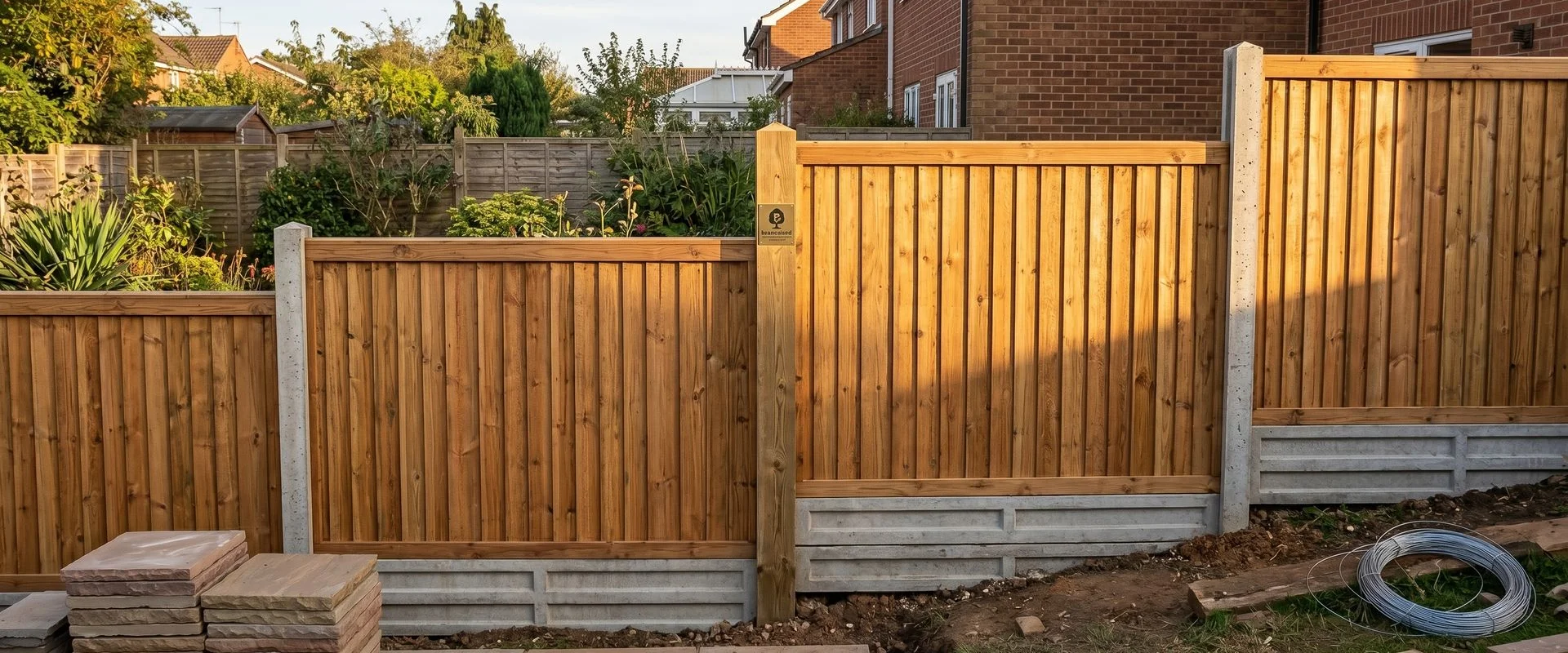
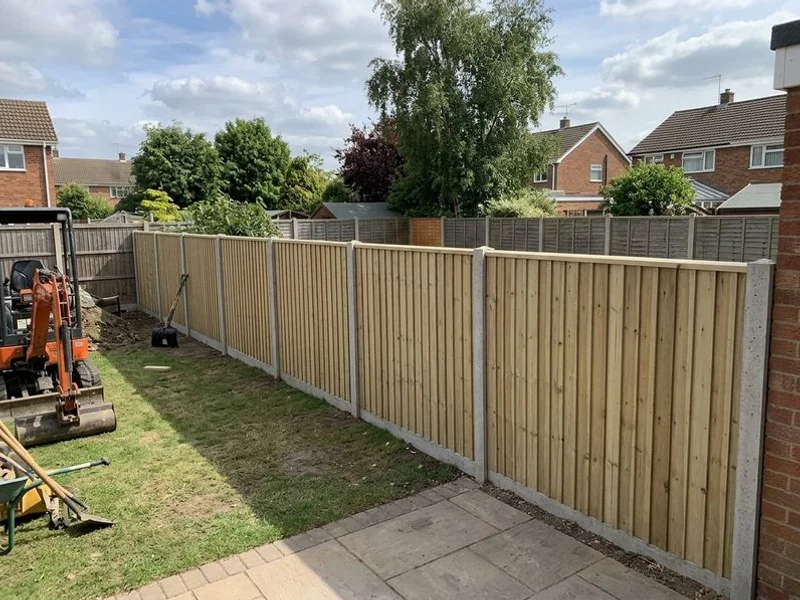
  • Closeboard fencing: vertical pressure-treated boards on horizontal arris rails. Best long-life domestic fence. £75–£110/m.
  • Lap-panel fencing: pre-made overlapping panels. Faster to install, cheaper, slightly shorter life. £75–£95/m.
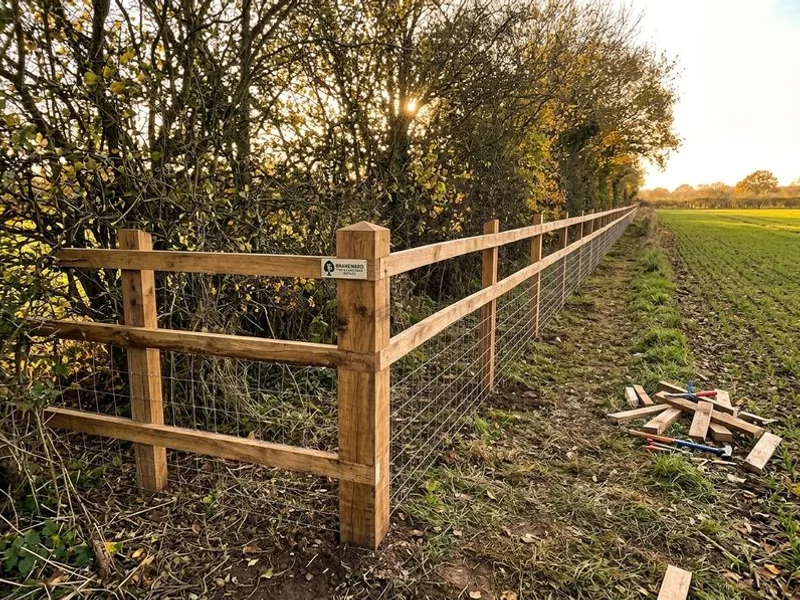
  • Post-and-rail: agricultural-style three-rail with stock netting if needed. Used on paddocks, larger plots and rural boundaries. £45–£75/m.
  • Picket fencing: front-garden picket in painted softwood or hardwood. Bespoke heights. £85–£130/m.
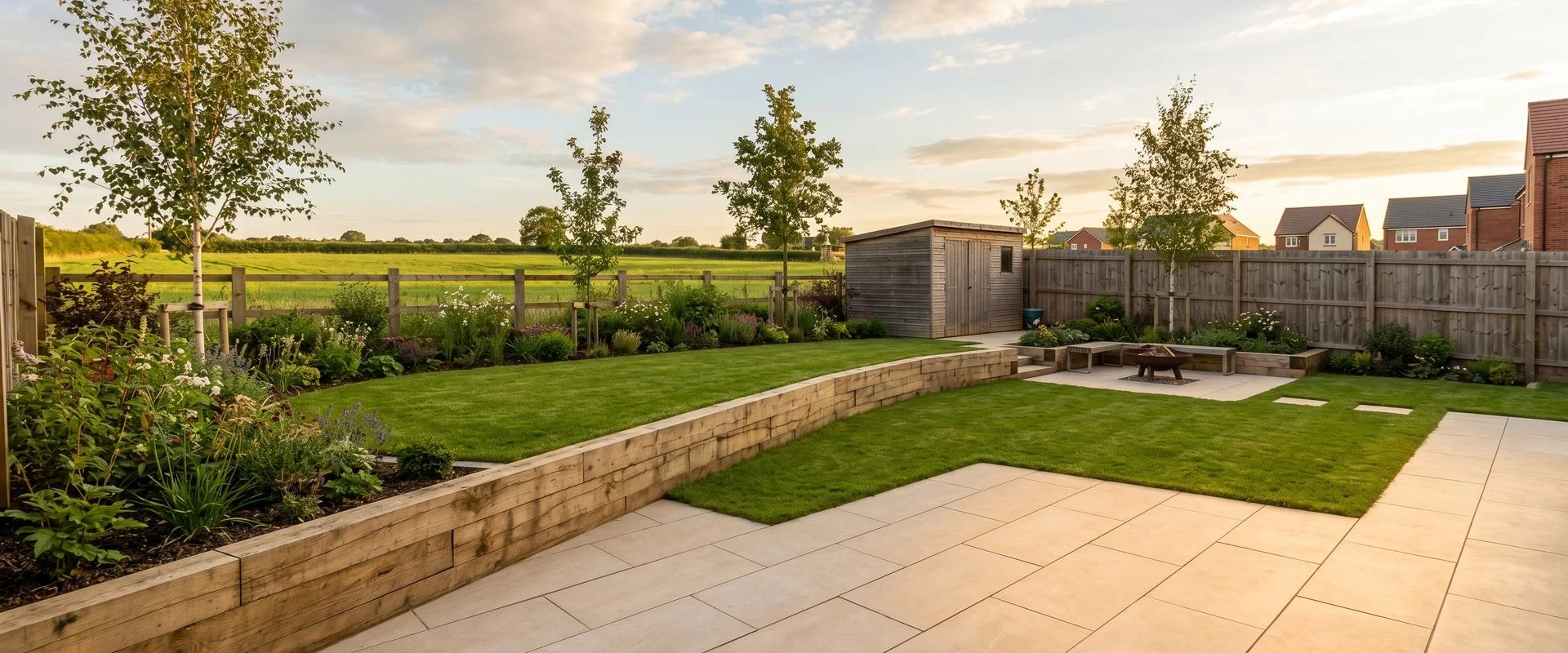
  • Sleeper retainers: railway-style softwood or oak sleepers stacked horizontally for retaining walls. £180–£280/m.
  • Brick walls: engineering or facing brick on poured concrete footing, with coping. Quoted bespoke.
  • Bespoke fencing: slatted, vertical board with horizontal trim, mixed material, decorative gates. Quoted bespoke.

Concrete posts are standard on every fence we install. Timber posts rot at the ground line within 8–15 years; concrete posts last 25+. There’s no upcharge, we just don’t install timber-post fencing as new build.
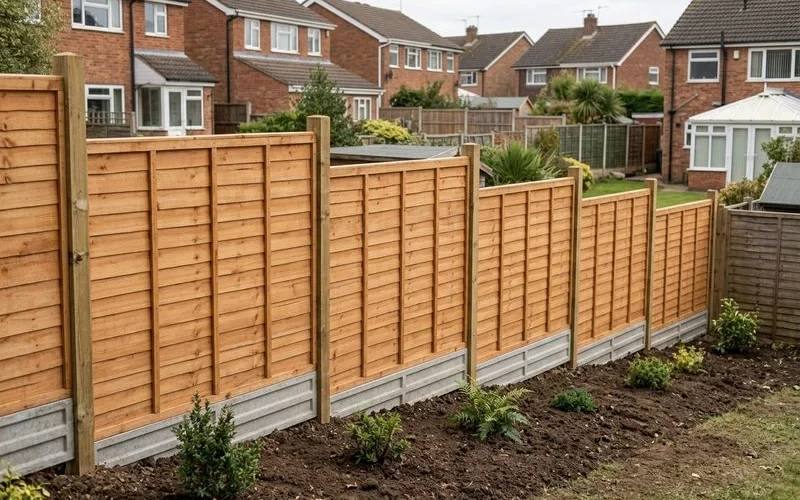
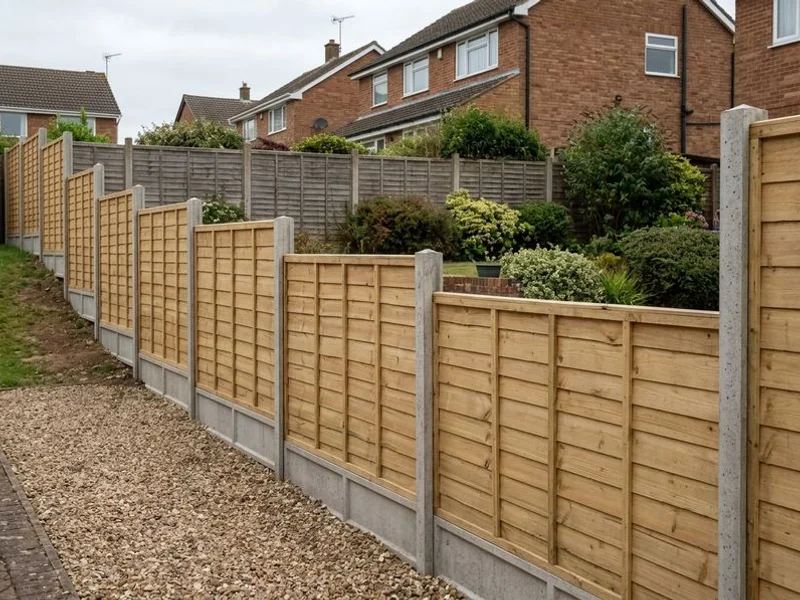
Stepped lap-panel fencing with gravel boards on a sloped Hillmorton side return, matching neighbour ground lines

Slopes, stepped vs racked

Two thirds of the fencing jobs we quote in Rugby involve a slope. Two ways to handle it:

  • Stepped: each panel sits horizontally between vertical posts, with the next panel stepped down a course or two at the next post. Creates a small triangular gap at each step which gravel boards or stepped fillers close. Works on any slope. Looks tidy and follows the slope predictably.
  • Racked: panels angled in plane to follow the slope continuously. Looks smoother across shallow slopes (under 1:8), but doesn’t work on steeper falls and limits panel choice (closeboard rather than pre-made lap).

We default to stepped for anything over 1:10. We’ll match neighbour ground levels carefully so the fence doesn’t sit obviously above or below their lawn line.

Permitted Development and Conservation Areas

Most domestic fencing in Rugby is Permitted Development: meaning no Planning Permission is needed, provided:

  • Maximum 2m high in back gardens and side returns
  • Maximum 1m high if next to a highway (front gardens fronting a road)
  • Not in a Conservation Area (additional restrictions apply)
  • Not part of a Listed Building’s curtilage (full Planning Permission needed)

Conservation Areas in Rugby, most of Dunchurch village, parts of Bilton’s older core, certain Rugby town fringes, have specific fencing restrictions. We’ll flag any consent issues on the site visit and handle the application if needed.

T-marks and boundary ownership

Before replacing a fence, we check who owns and maintains it. The convention:

  • The T-mark on your title deed boundary plan shows ownership, the T points into the garden of the owner
  • If both gardens have T-marks (a “double T”), it’s a shared/party fence
  • Where deeds are silent, the fence with arris rails facing your garden is conventionally yours
  • The “Right Side Rule” is a myth, no UK law specifies which side belongs to whom

We’ll confirm ownership on the site visit before quoting a replacement, and recommend a neighbour conversation in advance of work where the fence has been agreed shared.
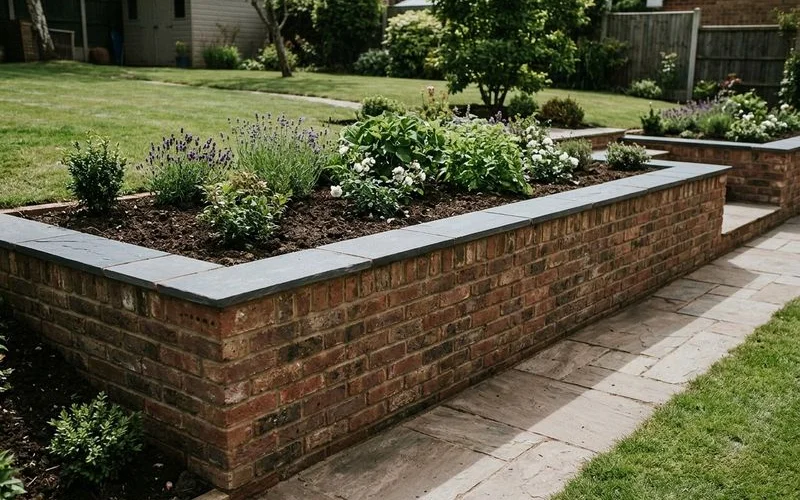
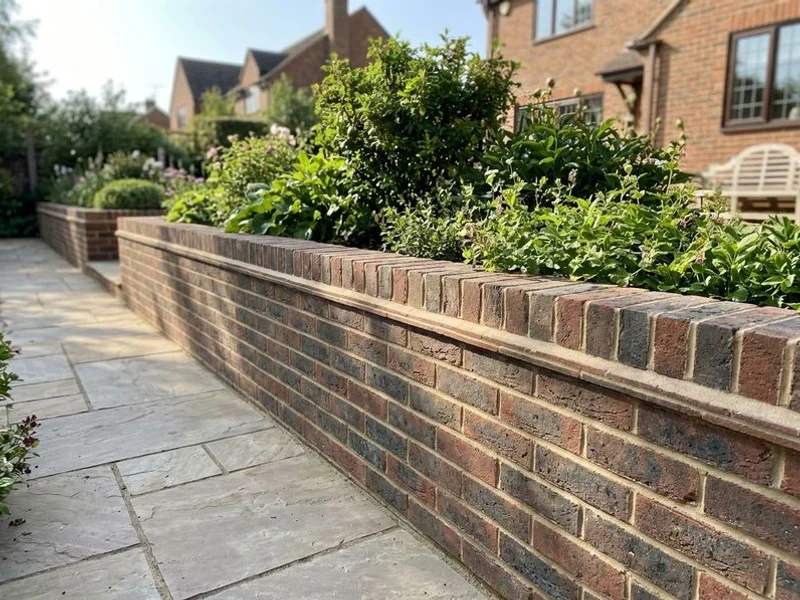
Brick retaining wall with coping-stone detail facing a raised border in a Bilton established garden

Walls, when fencing isn’t enough

Walls suit three scenarios that fencing doesn’t:

  1. Retaining significant earth: over about 600mm of soil pressure, you need a proper wall. Sleeper retainers handle up to 1m unsupported; brick or concrete-and-render handles taller and longer runs.
  2. Boundary in a Conservation Area: local planning often prefers walls over fences, especially in heritage areas of Bilton, Dunchurch and Rugby town centre.
  3. Permanent stock-proof or security boundary: brick walls deter casual climbing and don’t get blown down.

We work on all three. Brick walls need a poured concrete footing (450mm wide × 300mm deep on most sites, deeper on heavy clay), which means full excavation rather than fence-post post-hole digging. The site visit confirms what’s actually needed.

Pricing for fencing and walling in Rugby

Typical Rugby supplied-and-fitted prices:

  • Lap panel, concrete posts, gravel boards (1.8m): £75–£95/m
  • Closeboard, concrete posts, gravel boards, capping (1.8m): £85–£110/m
  • Post-and-rail with stock netting: £45–£65/m
  • Picket fencing (1.0–1.2m, painted): £85–£130/m
  • Sleeper retaining wall (up to 1m unsupported): £180–£280/m
  • Brick wall: quoted bespoke, typically £450–£800/m for a 1m wall

Removal of old fencing and gateway openings are quoted separately for transparency. Talk to the Rugby tree surgery and landscaping team for a free written quote, and pair fencing with garden landscaping if the boundary work sits inside a wider project.
How fencing works with Branchard in Rugby

01

Site visit & measure

We measure the run, check ground, slope and any boundary disputes before quoting.

02

Written quote

Itemised quote within 48 hours: posts, panels, gravel boards, gates and removal of old fence broken out.

03

Old fence out

Old fencing removed, old concrete dug out, ground prepped to consistent depth.

04

New fence in

Concrete posts set in fresh post-mix, panels stepped or racked for slope, gravel boards and caps fitted.

What does fencing cost in Rugby?

Typical range

£75 –£180

per metre (supplied & fitted)

Closeboard usually £75–£110/m. Sleeper retainers £180–£280/m. Brick walls quoted bespoke.

Get a free written quote

Why Rugby homeowners choose Branchard for fencing

Concrete posts standard

Timber posts rot at the ground line within 8–15 years. Concrete posts last 25+ years. Standard on every fence we install, no upcharge.

Slope-stepped panels

Sloping side returns get panels stepped down to match neighbour ground lines. No awkward triangles, no panels above a wedge of fresh air.

Boundary clarity

We mark the T-mark (boundary ownership indicator) on the quote and confirm with you before starting. Avoids fence disputes with neighbours.

Gates and locks

Galvanised hinges, lockable bolts, drop-bolts on double gates. Fitted properly so they don't drop or rub after a winter.

Ready for a free written quote?

Free site visit. No obligation. Itemised quote within 48 hours, BS3998 compliant and fully insured.

Recent fencing jobs across Rugby

What customers say about our fencing work

★★★★★
"Branchard quoted three other firms out the water, and the work was finer detail too. Closeboard fence on a sloping side return, perfectly stepped panels, concrete posts. Thank you."

Sarah & Mark T.

Rugby

★★★★★
"120m of post-and-rail with stock netting along a paddock boundary. Done in three days, perfectly straight, gates that swing and shut properly. Reasonable on price."

Paul N.

Dunchurch

★★★★★
"Old timber-posted fence rotting at the base. Branchard pulled it out, set new concrete posts, fitted closeboard and gravel boards. Should outlast me at this rate."

Janet R.

Bilton

Fencing FAQs

How much does a closeboard fence cost in Rugby?
Typically £75–£110 per metre supplied and fitted, including concrete posts and gravel boards. Slope, removal of old fencing and gateways are added separately so the breakdown is clear. Lap-panel fencing is similar. Bespoke designs (vertical board, slatted, mixed-material) run higher.
What's the difference between closeboard and lap panel?
Lap panel is the cheaper pre-made option, overlapping horizontal boards in a 1.83m wide panel. Closeboard (also called feather-edge) is built on site from individual vertical boards on horizontal arris rails, typically more durable, easier to repair section-by-section, and lasts longer. We install both, most domestic clients choose closeboard for the back boundary and accept lap panels for less prominent runs.
Do I need Planning Permission for a fence?
Most domestic fences fall under Permitted Development: up to 2m high anywhere except next to a highway, where the limit drops to 1m. Conservation Areas have additional restrictions. We'll flag any consent issues on the site visit and handle the application if needed.
Who owns the fence, me or my neighbour?
Check your title deeds, they should show a 'T-mark' on the boundary plan indicating which side owns and maintains the fence. If unclear, the convention is the fence with the rails facing your garden is yours. We'll confirm boundary ownership on the site visit before starting any replacement work.
Can you fit a fence on a slope?
Yes, there are two ways to handle slope: 'stepped' (panels stepped down at each post, leaving a small triangular gap that gravel boards close) or 'racked' (panels angled to follow the slope continuously, suitable for shallow slopes only). We choose based on slope angle, neighbour ground line, and aesthetic preference. Stepped works on any slope up to about 1:6.
How long do your fences last?
Closeboard with concrete posts and pressure-treated boards typically lasts 20–25 years before significant rebuild is needed. Lap panels with concrete posts run 12–18 years. We'd budget on board replacement once mid-life and full rebuild around year 25. Treating the boards every 4–5 years extends life by 30%.

Need fencing in Rugby? Get a free quote.

Same-week site visit. Written, itemised quote within 48 hours. BS3998 compliant, fully insured.

BS3998 compliant NPTC certified climbers £5m+ public liability