What is tree removal and felling?
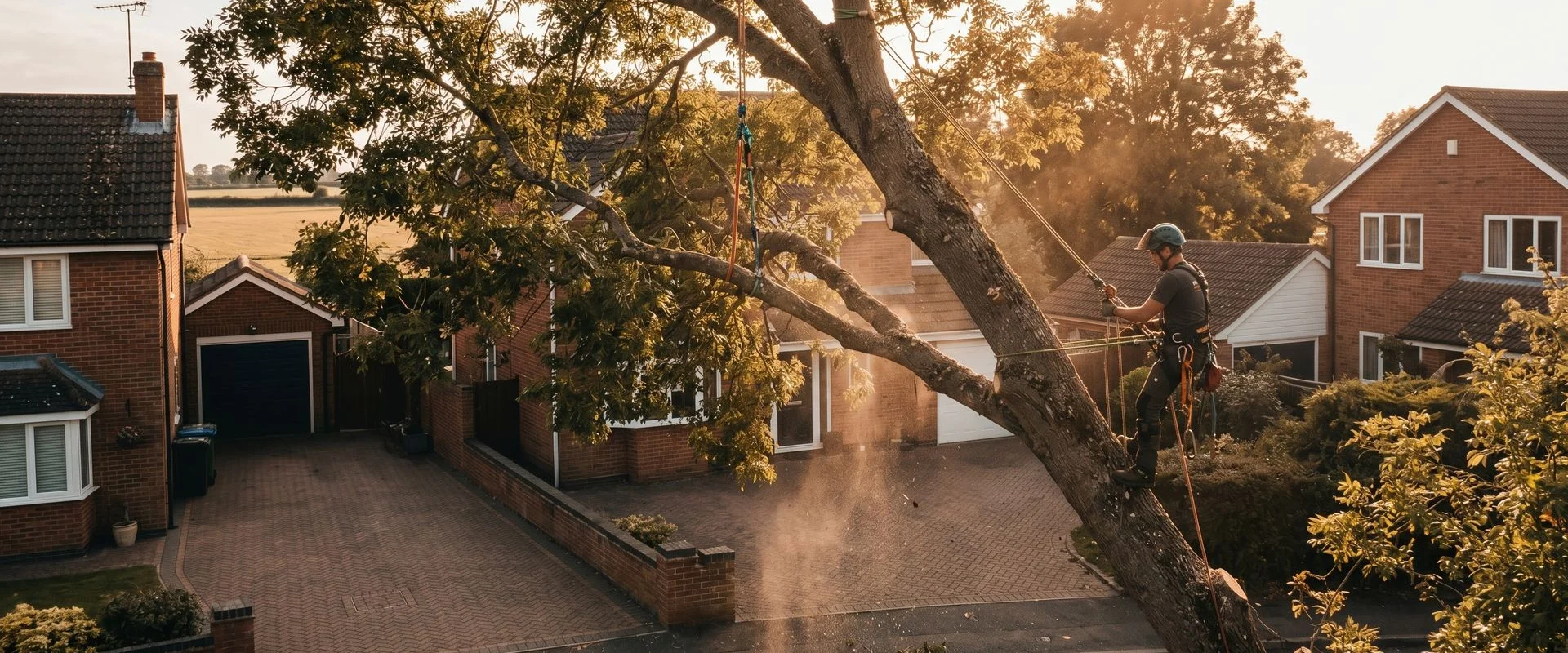
Tree removal and felling means taking a tree down: either as a single straight fell where space allows, or in sections (sectional dismantling) where the tree is over a house, fence, garage or other structure that can’t be hit. The right method depends on size, lean, structural condition, surrounding obstacles and access for kit.
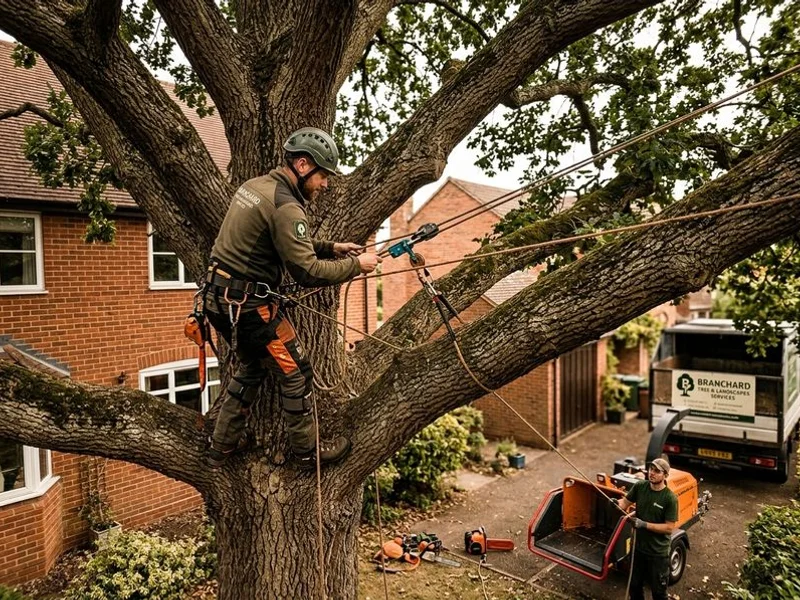
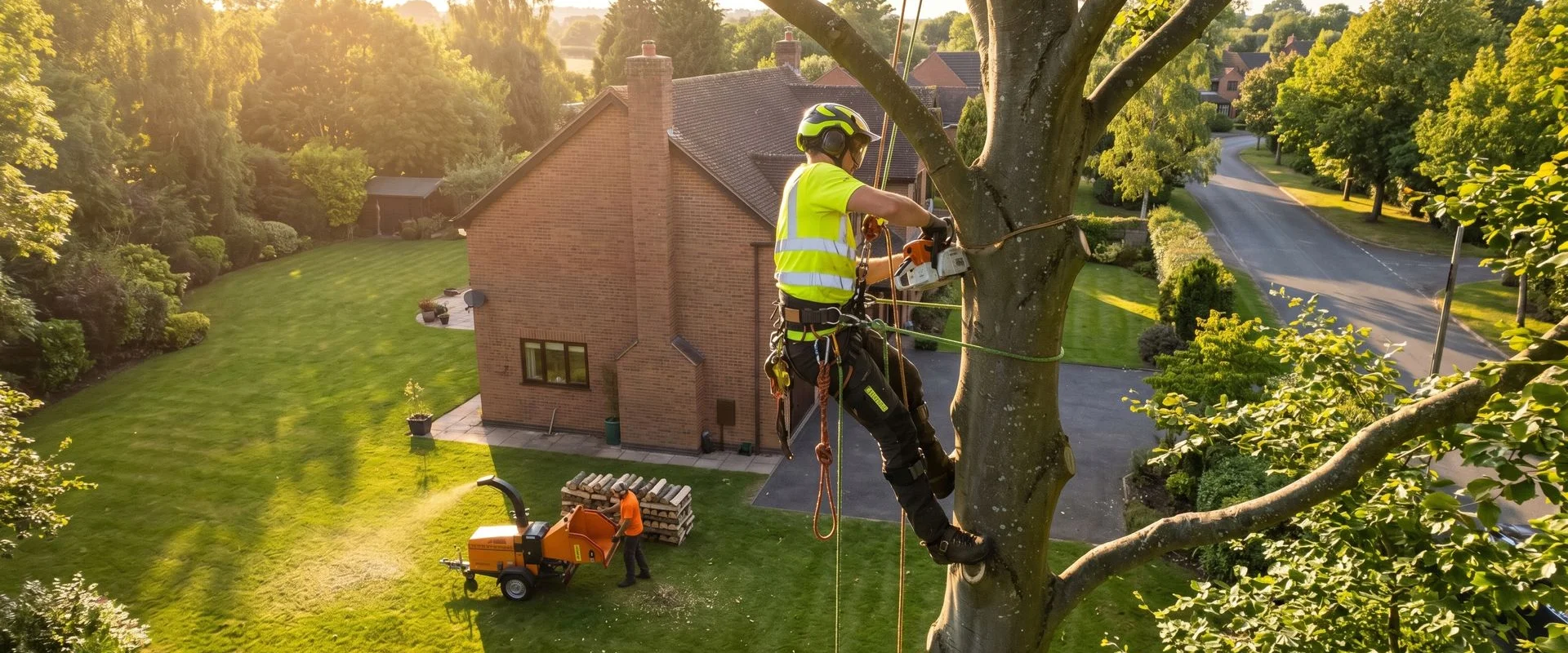
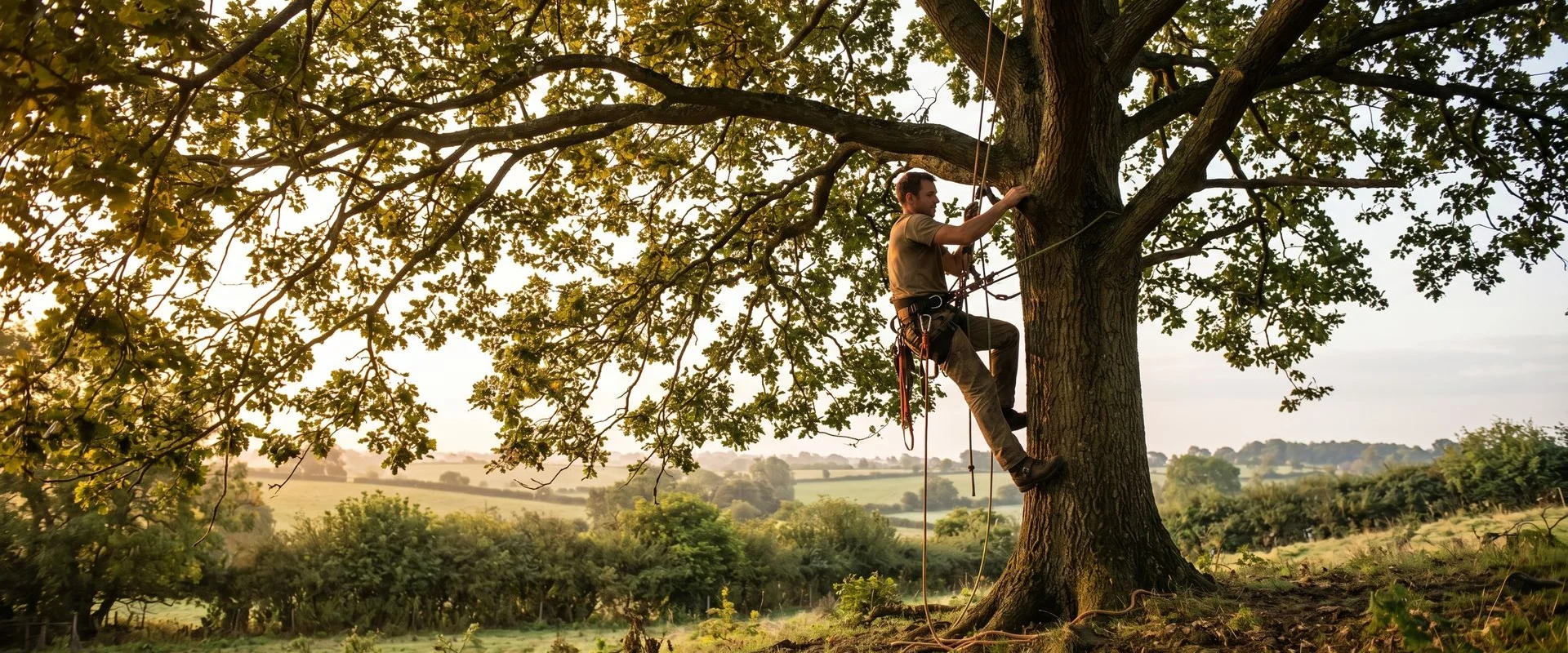
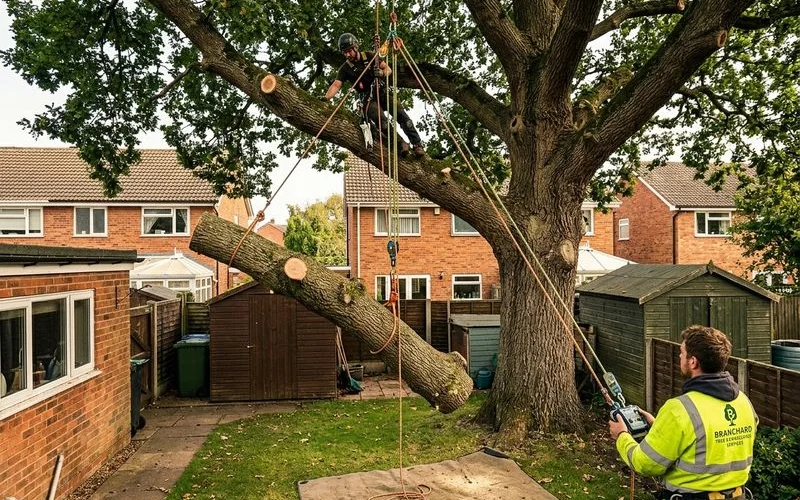
We use sectional dismantling on most Rugby domestic jobs because gardens here rarely give you the felling room a country field would. Our NPTC-certified climbers rig down individual limbs on rope systems, lowering each section under control so that nothing freefalls onto property below.
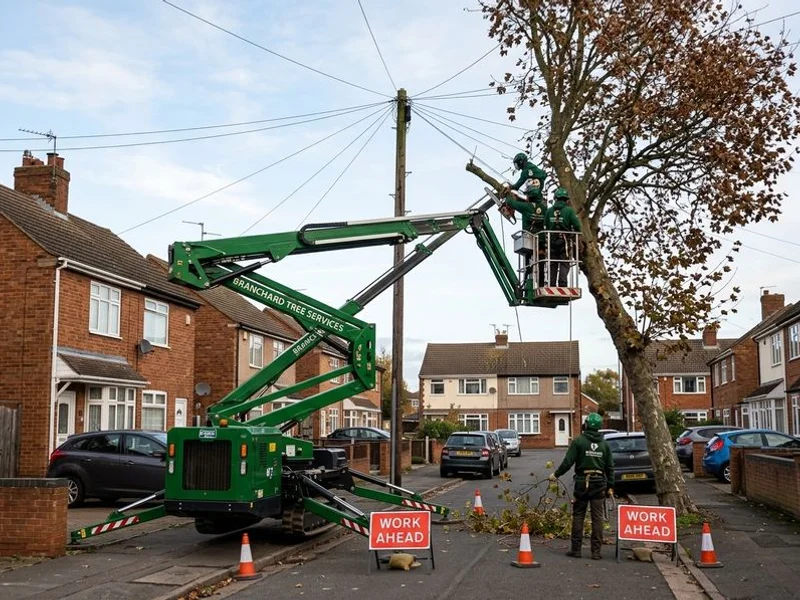
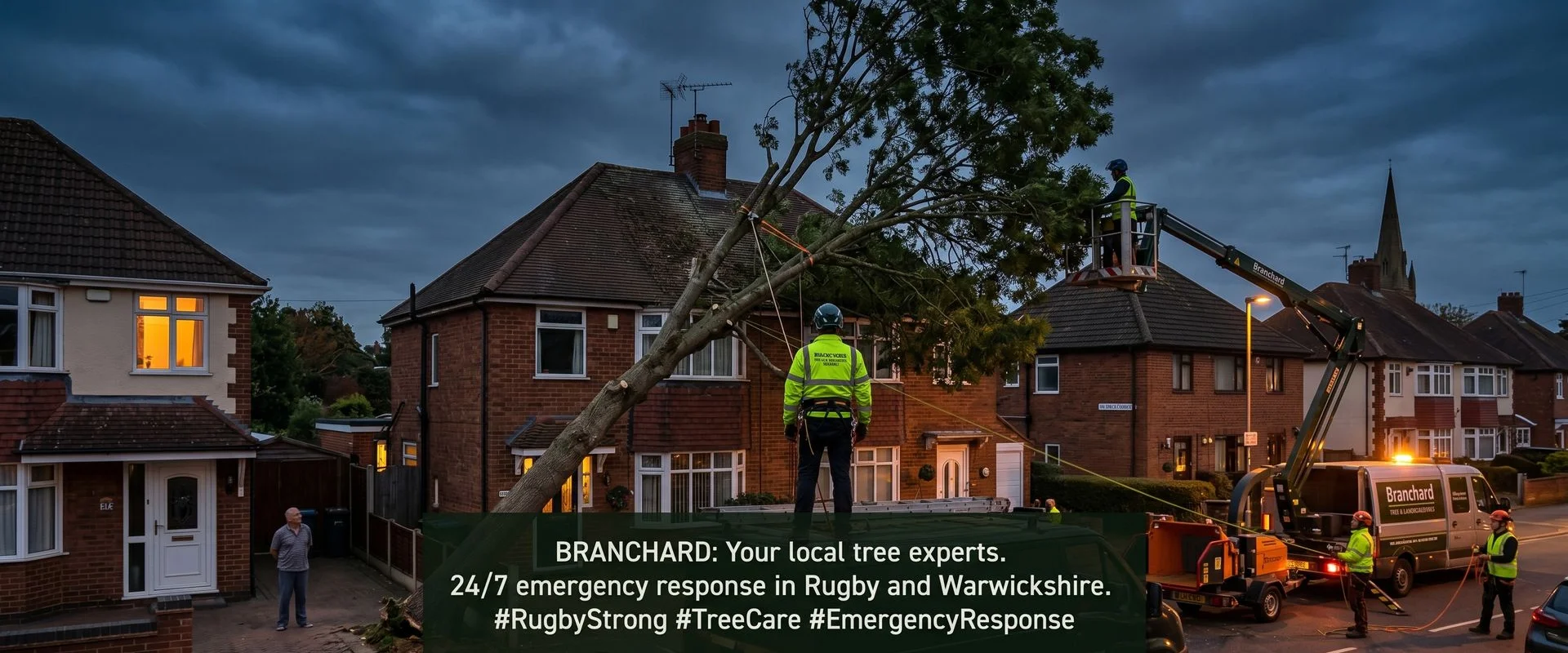
Where the canopy is too large or the lean too pronounced for safe climbing, we bring in a MEWP (cherry picker). MEWP access also speeds up larger jobs significantly: what would be a two-day climb-only project can finish in a single day with the platform on site.
When removal is the right call
We don’t push removal where retention is feasible. A crown reduction, thinning or deadwooding job is often cheaper, less disruptive and better for the tree’s long-term structure. Removal is genuinely the right answer when:
- The tree is dead, dying or structurally unsafe (root-plate failure, major included bark unions, advanced decay)
- It’s outgrown its space beyond what proportional reduction can sensibly fix
- It poses an ongoing risk to property that pruning won’t resolve
- It’s the wrong species in the wrong place (poplar over a foundation, leylandii in a 5m garden)
- A storm has damaged it beyond made-safe repair
If you’re uncertain, we’ll tell you on the site visit. We don’t sell removals to people who don’t need them.
TPOs, Conservation Areas and council process in Rugby
Before any tree comes down inside Rugby borough, we check two things: whether the tree has a Tree Preservation Order (TPO) on it, and whether the property sits inside a Conservation Area. Both are managed by Rugby Borough Council’s tree officer.
A TPO means you cannot lawfully remove or significantly reduce the tree without written consent. A Conservation Area means six weeks’ notice must be served before work, giving the council time to issue a TPO if they wish. We handle both processes on your behalf: checking the register, completing the form, submitting the application and following up with the tree officer.
Common TPO and Conservation Area patterns we see:
- Dunchurch village: high TPO frequency around the green and Conservation Area coverage on most older streets
- Bilton older core: Conservation Area covers many of the heritage roads
- Hillmorton: TPOs scattered through 1930s housing, particularly on mature oaks and limes
- Rugby town centre fringe: Conservation Area coverage near the school and along the canal
Council process from a clean application typically runs 6–8 weeks. We factor that into the quote so you know whether the work can start the week after our visit or whether we’re waiting on the tree officer.
Pricing for tree removal in Rugby
Tree removal costs depend on five things: tree size (height and stem diameter), species (some are heavier and trickier to rig than others), access for chipper and MEWP, surrounding structures, and stump treatment. Typical Rugby ranges:
- Small trees (under 8m, garden access OK): £250–£500
- Medium trees (8–15m, sectional dismantle): £500–£1,200
- Large trees (15m+, full rigging or MEWP): £1,200–£2,500
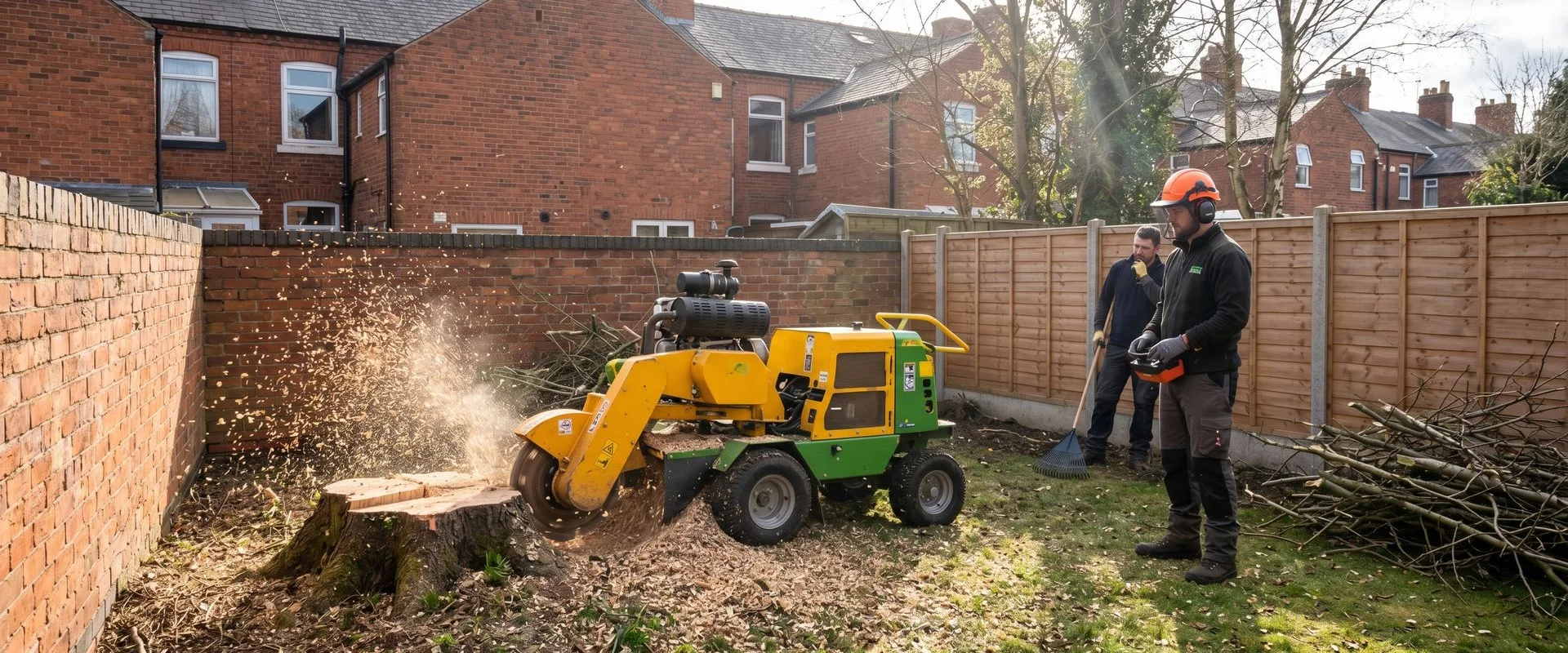
- Stump grinding (separate add-on): £80–£300
- Conservation Area / TPO handling: included in the quote
Every quote is written, itemised and free of obligation. Tree work, waste removal and any optional extras (stump grinding, gate work, replanting) are broken out separately so you can compare like-for-like with other quotes.
How a typical Rugby tree removal day runs
For a standard mid-size sectional dismantle in a Rugby back garden, the day usually looks like this:
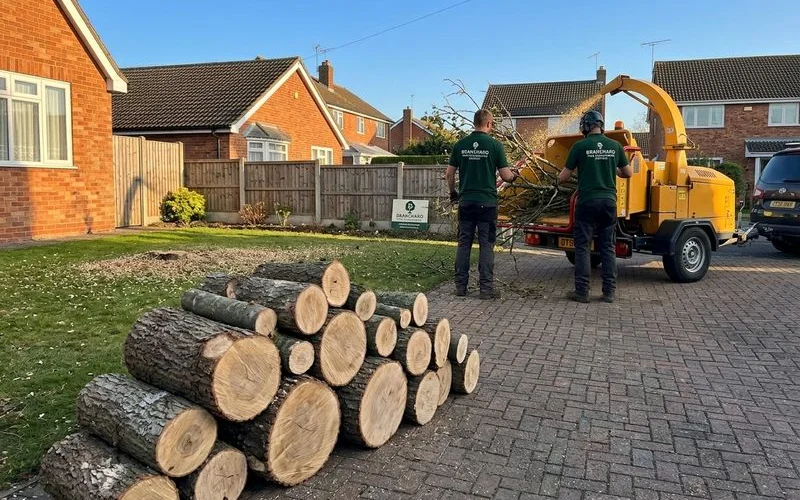
- 08:00 – set-up: chipper positioned on the drive or street, drop zone tarped, climber kit checked, neighbours notified if access requires it
- 08:30 – climb up, top out: climber ascends to the leader, removes the top section first (smaller, safer rigging)
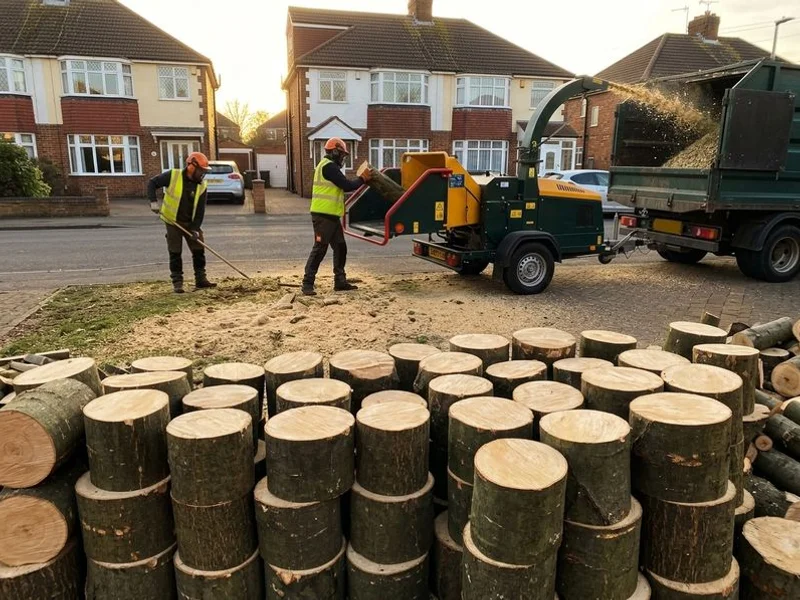
- 09:30 – work down: limbs rigged and lowered in sections, ground team chips arisings continuously
- 13:00 – stem to ground: main stem dismantled section by section once branches are clear
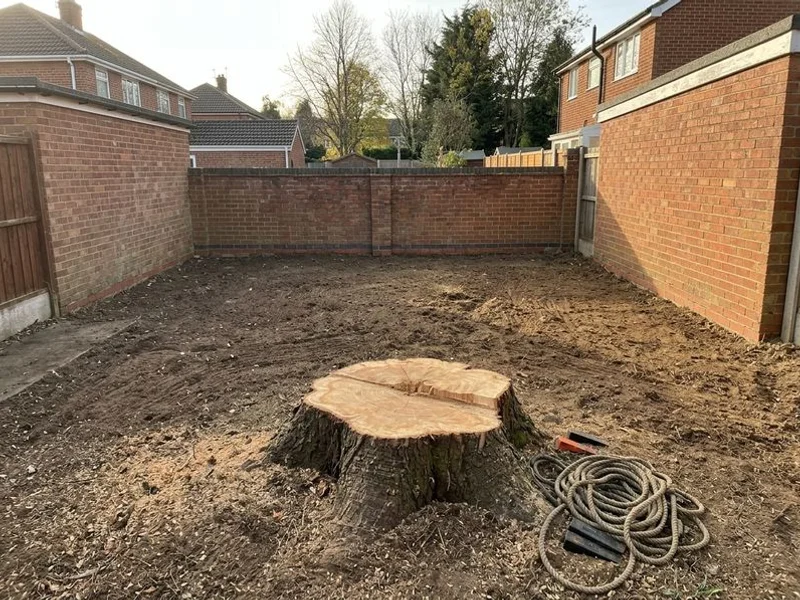
- 15:30 – stump cut, rake: stem stumped to ground level, site raked, photos taken for the file
- 16:00 – clear: chipper and ropes packed, drive cleared, paperwork signed off
Larger jobs run two or three days. Storm-damage callouts that need made-safe work first often span two visits: one to make safe, a second to complete the removal.
Talk to a Rugby tree surgeon and landscaping team who’ll tell you straight whether removal is the right answer for your tree. For storm damage and made-safe priority callouts, see our emergency tree services.