What’s in a maintenance visit
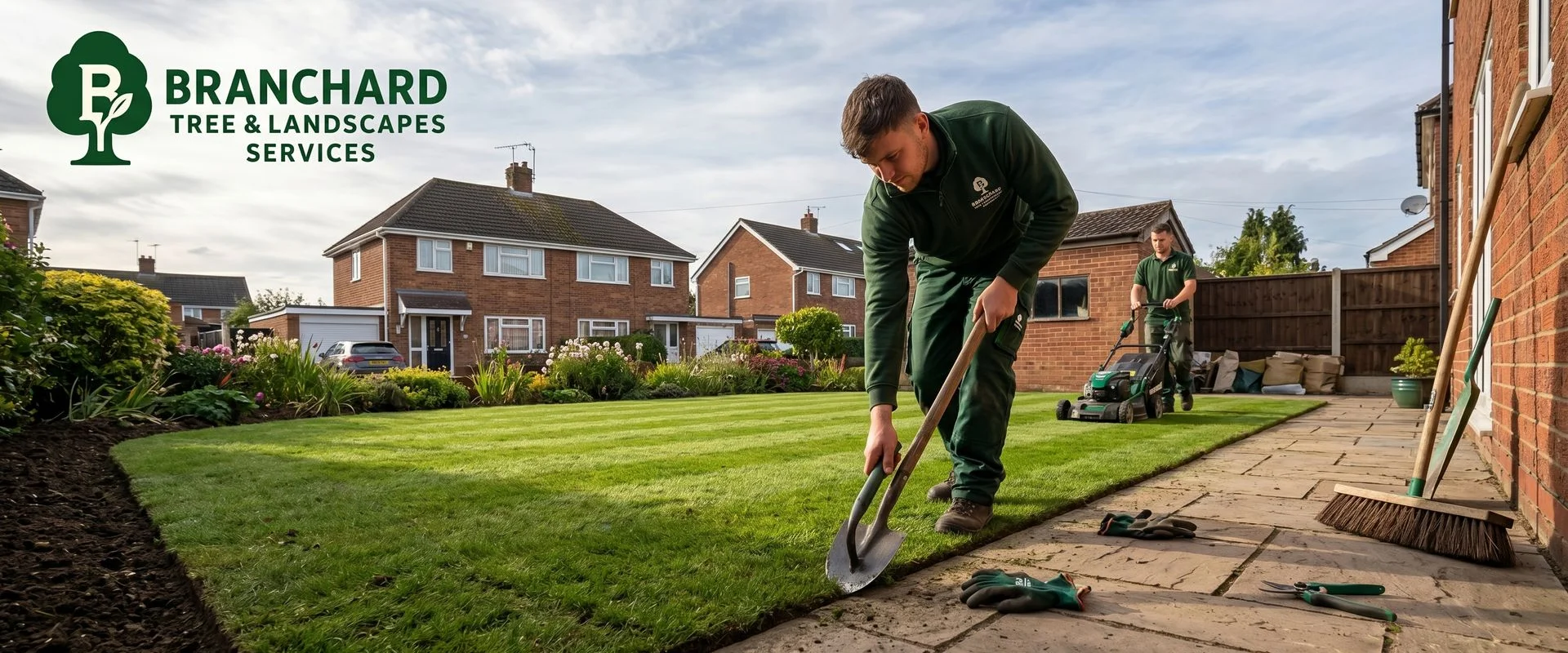
A standard maintenance visit covers the routine work that keeps a garden looking right between bigger jobs:
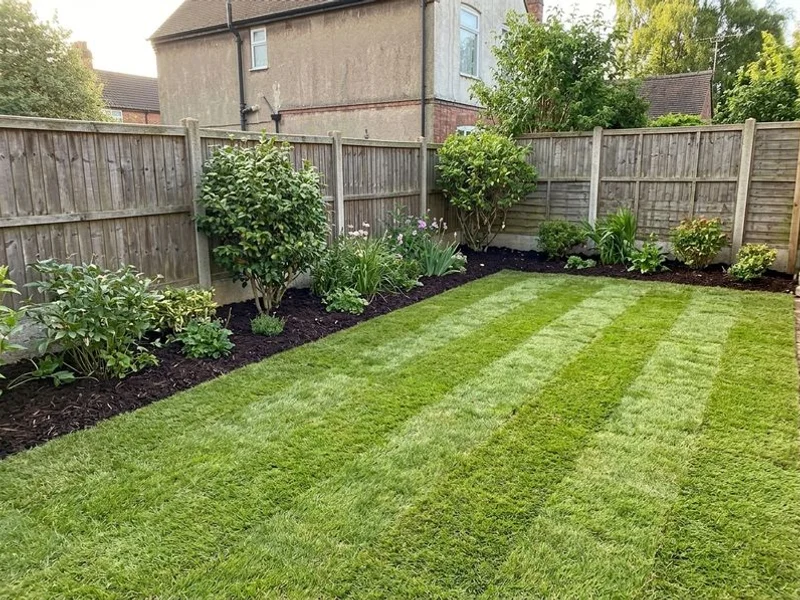
- Mowing: petrol rotary or rotary-cylinder depending on lawn type, set to 25–35mm in normal use, 50mm in heat to protect roots
- Edging: half-moon edge tool to keep border lines crisp
- Weeding: visible bed weeds removed by hand or hoe
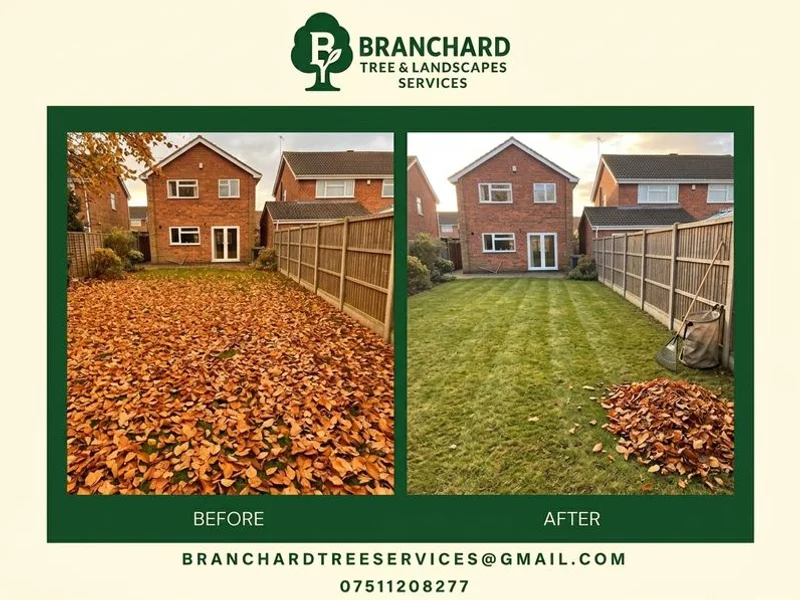
- Litter and debris: leaves, fallen twigs, and general tidy
- Border tidy: deadheading flowers, removing yellowed foliage, cutting back spent perennials
- Final pass: paths swept, borders raked, mower-line tidy across the lawn
Hedge cutting, mulching, full-bed digging, lawn feeding and seasonal tidy work are typically quoted separately, added on as one-off jobs or scheduled into specific visits.
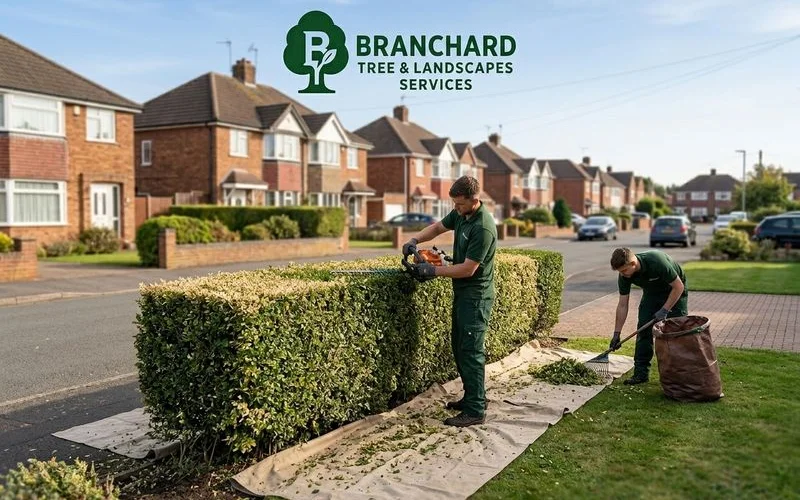
Cadence, what your garden actually needs
The single biggest mistake in garden maintenance is forcing a cadence that doesn’t fit. A small Rugby terrace garden put on a weekly summer schedule wastes money. A large Dunchurch country garden put on a monthly schedule turns into a jungle by June.
How we recommend cadence after a site visit:
- Tiny garden (under 50 sqm): monthly Apr–Oct, no winter visits or one tidy in Nov
- Standard suburban garden (50–150 sqm): fortnightly May–Sep, monthly Apr/Oct/Nov, no Dec–Feb visits
- Larger garden (150–400 sqm): weekly May–Aug, fortnightly Apr/Sep/Oct, monthly Nov + Mar
- Country/large plot (400+ sqm): weekly Apr–Sep, fortnightly Oct–Nov, scheduled winter prep visits
These are starting points. We’ll adjust after the first 2–3 visits based on what your garden actually does, fast-growing lawns get bumped up, slow-growing borders get bumped down.
Hedge cutting and the nesting season
The Wildlife & Countryside Act 1981 protects active bird nests during the breeding season (1 March – 31 August in the UK). Cutting an occupied hedge during this window is illegal and carries fines.
Our rules for hedge cutting:
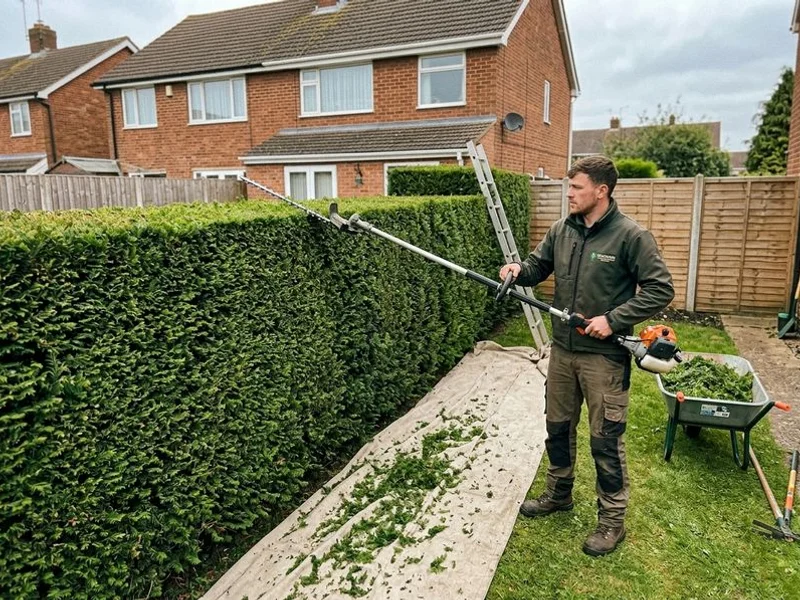
- Outside nesting season (Sep–Feb): standard cutting, formal hedges cut to template, informal hedges shaped
- During nesting season (Mar–Aug): light formal cuts only, with thorough nest check 24 hours before cutting. We will not cut any hedge with an active nest.
- No exceptions for “but the neighbours’ is overgrown”: we’ll book the cut for September if the hedge is occupied
For evergreen formal hedges (yew, laurel) the optimal cut window is late summer (Aug–Sep). For deciduous formal hedges (beech, hornbeam) it’s mid-late summer (Jul–Aug). For mixed native hedges, late winter (Feb) is the standard cut.
Seasonal extras through the year
Things we typically schedule into the maintenance calendar in addition to standard visits:
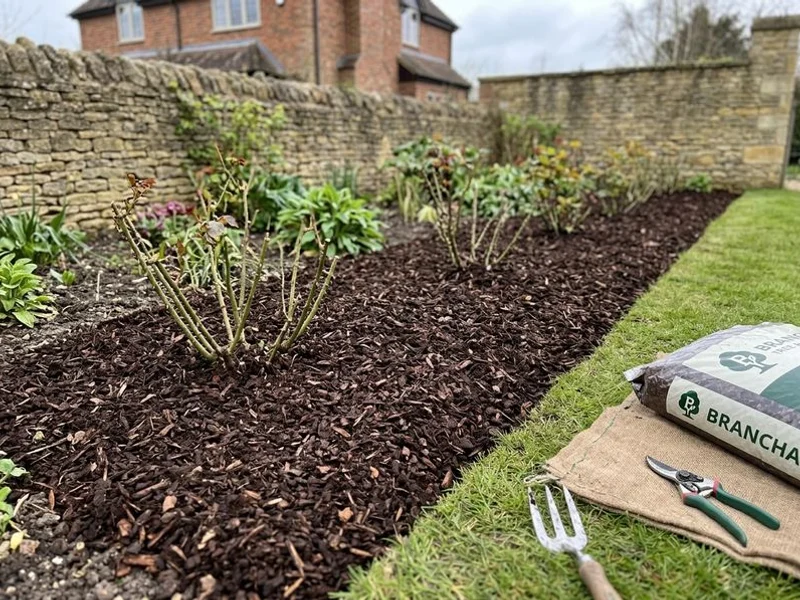
- March/April: spring border prep, mulch top-up, first lawn feed, pre-emergent weed treatment
- May/June: hedge bench check, perennial staking, summer-bed planting
- July/August: light hedge trims (where nesting clears), lawn feed, deadheading run
- September: heavy hedge cutting, lawn aeration, autumn feed
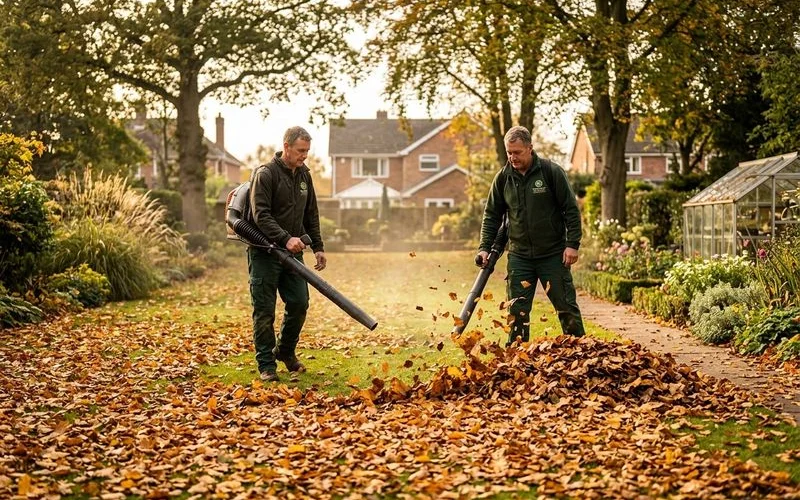
- October: leaf clearance starts, perennial cut-back, bare-root planting prep
- November/December: full leaf clearance, structural pruning, mulch refresh
We build these into the contract as named jobs so you know what’s happening and when.
Pricing for garden maintenance in Rugby
Typical Rugby pricing:
- Small garden, monthly visit: £30–£40/visit
- Standard suburban, fortnightly: £40–£70/visit
- Larger garden, weekly summer + fortnightly winter: £70–£120/visit
- One-off seasonal tidy (catch-up, pre-sale, end-of-tenancy): £150–£400 depending on size
- Hedge cut (per metre, supplied separately): £4–£8/m for low formal hedges, £10–£20/m for tall hedges needing platform access
Talk to the Rugby tree surgery and landscaping team for a free site visit and right-sized cadence quote.