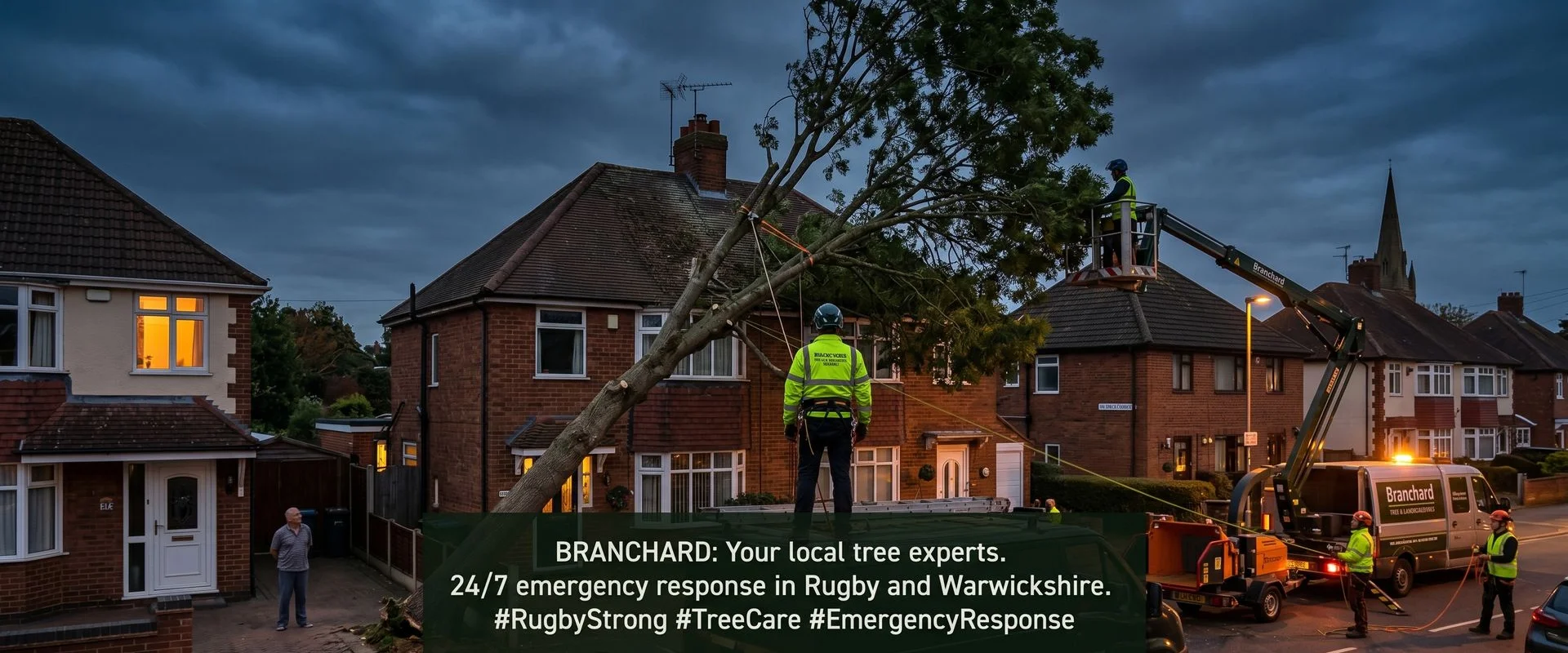
What counts as an emergency tree
Not every fallen branch needs an emergency callout. The genuine emergencies, the ones we triage same-day:
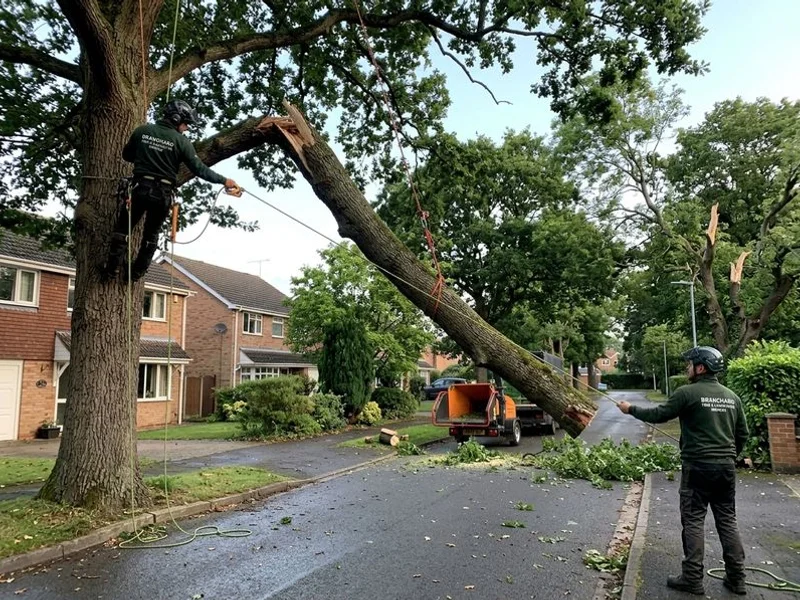
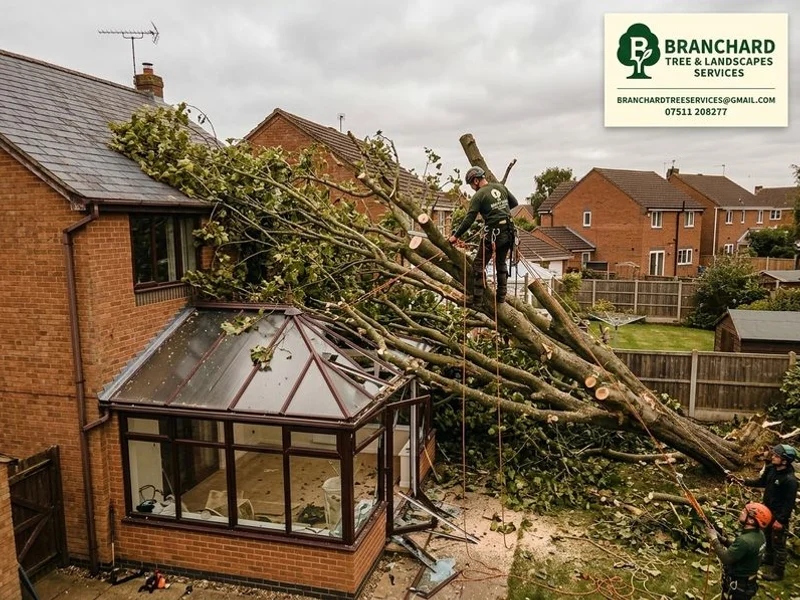
- Tree on a structure (house, garage, conservatory, boundary fence)
- Tree on or about to hit a power line (after the DNO has isolated it on 105)
- Tree blocking a drive, footpath or carriageway
- Hanging limb over a regularly used path or driveway
- Leaning stem with visible root-plate failure (root-plate lifted, soil cracking around the base)
- Storm-damaged stem that’s split, cracked or close to falling
Things that look bad but usually aren’t urgent:
- A neat windblown branch that’s already on the ground in your garden
- A tree that lost some twigs and small branches in the wind
- A canopy that looks lopsided but is structurally fine
- A leaning tree that’s been leaning the same amount for years (lean alone isn’t enough, root-plate movement is)
If you’re not sure, send us a photo by text. We’ll tell you straight whether it needs the emergency rate or whether it’ll keep until next week’s standard slot.
Made-safe vs full removal, why we separate them
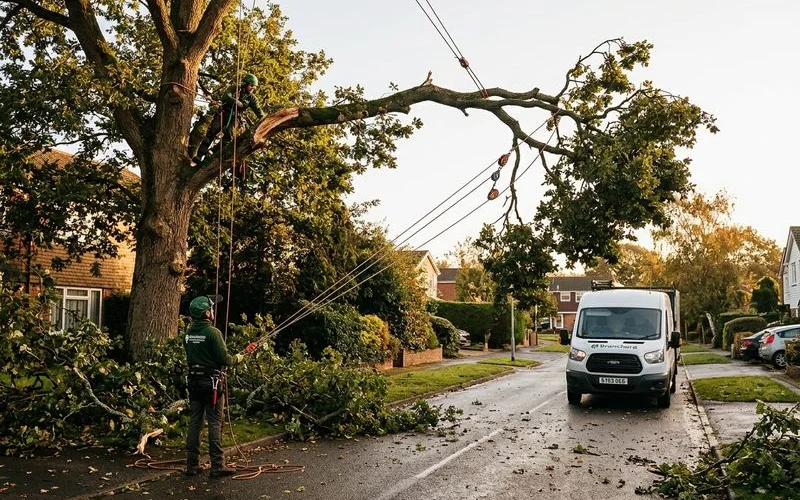
Doing a full tree removal at emergency rates costs roughly twice what it would at standard rates. There’s almost never a good reason to pay that. Instead, we split the work:
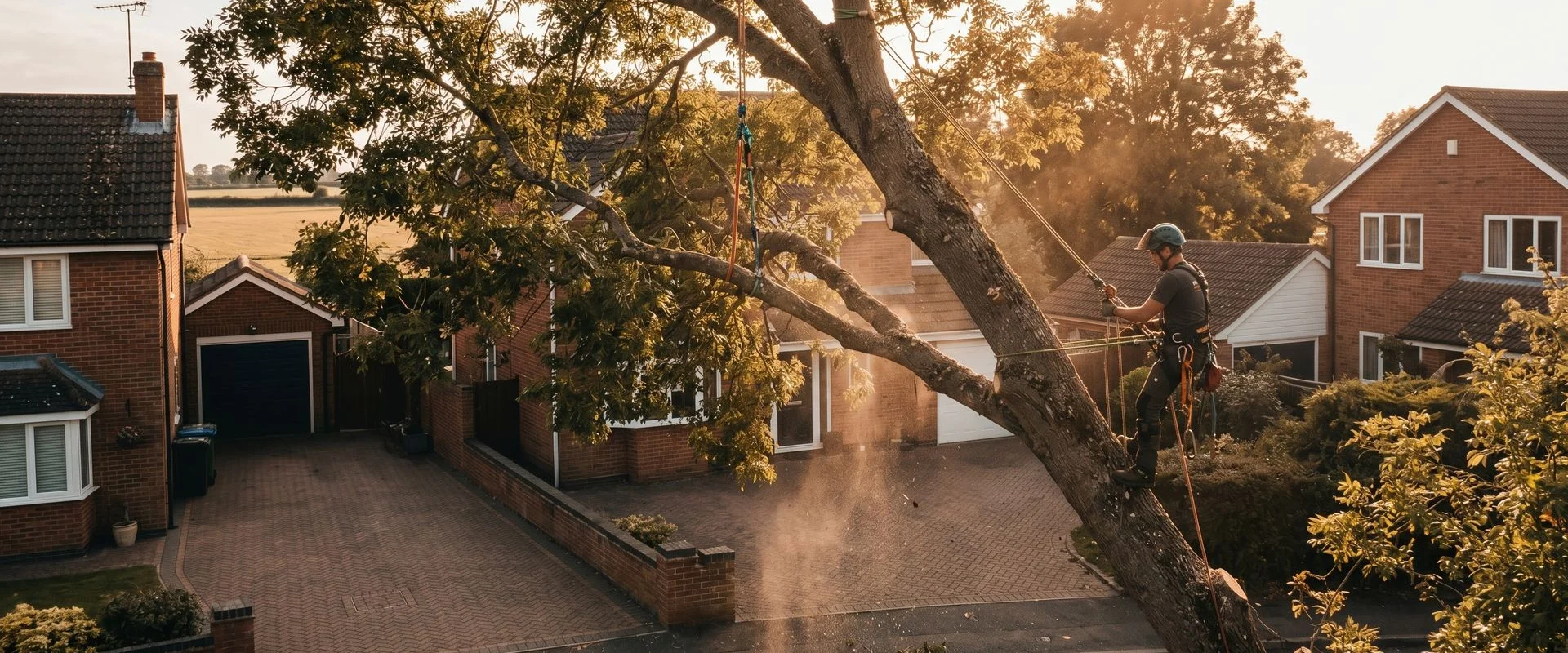
- Made-safe (emergency rate): the genuinely time-critical bits. Hanging limbs taken off, leaning stem rigged or propped, area cleared and cordoned. Usually 1–4 hours of work.
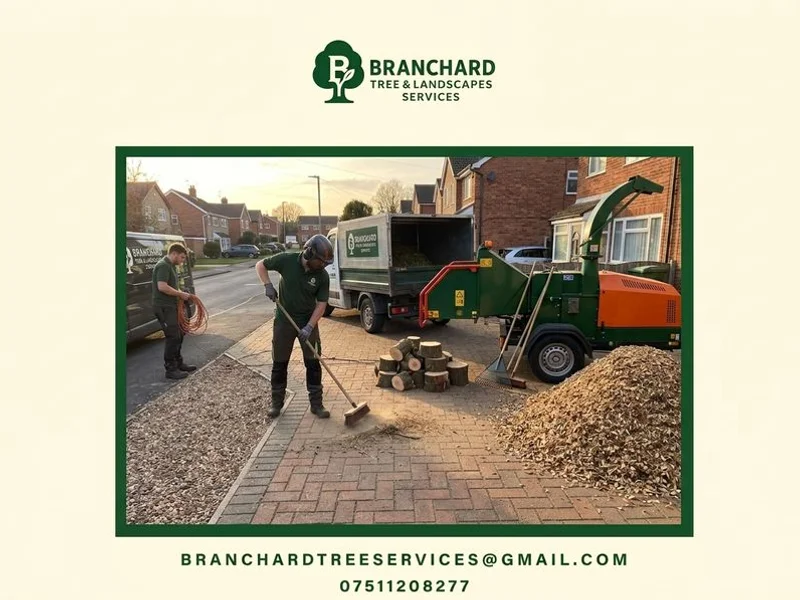
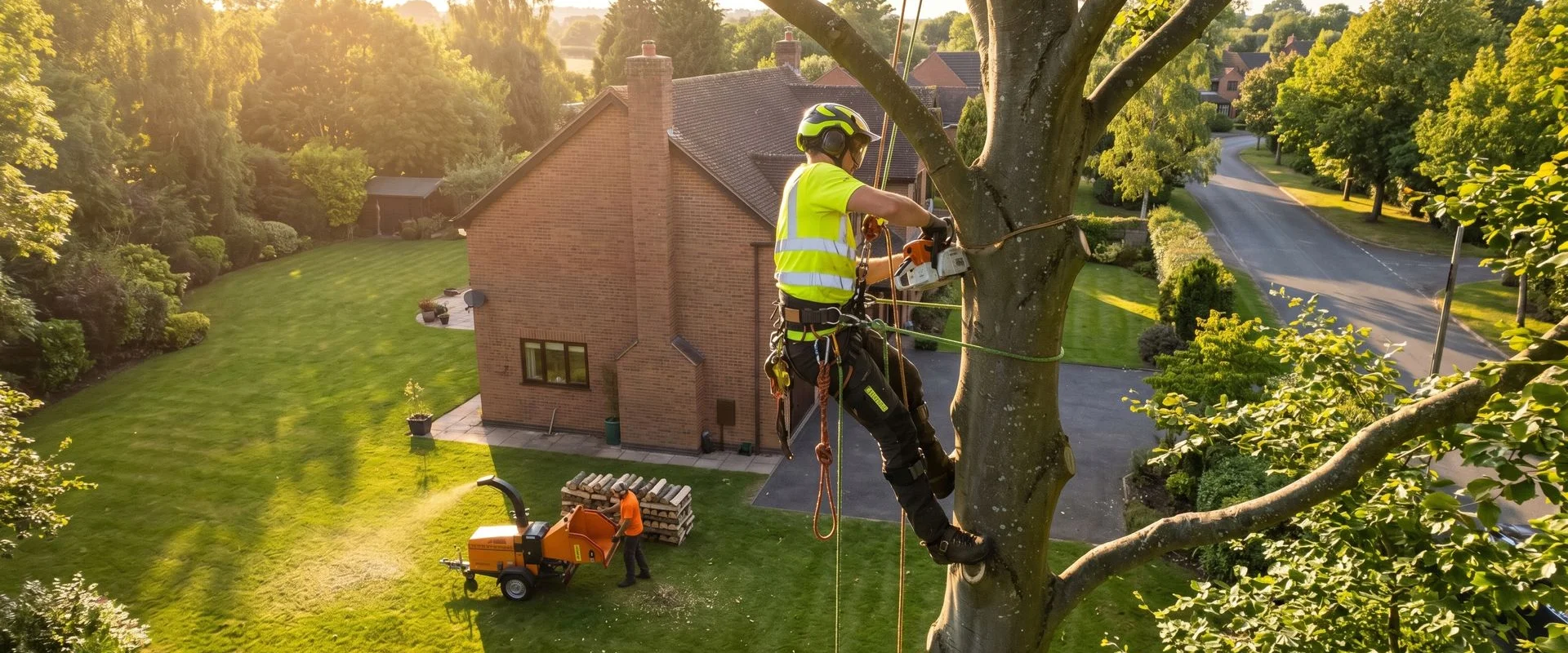
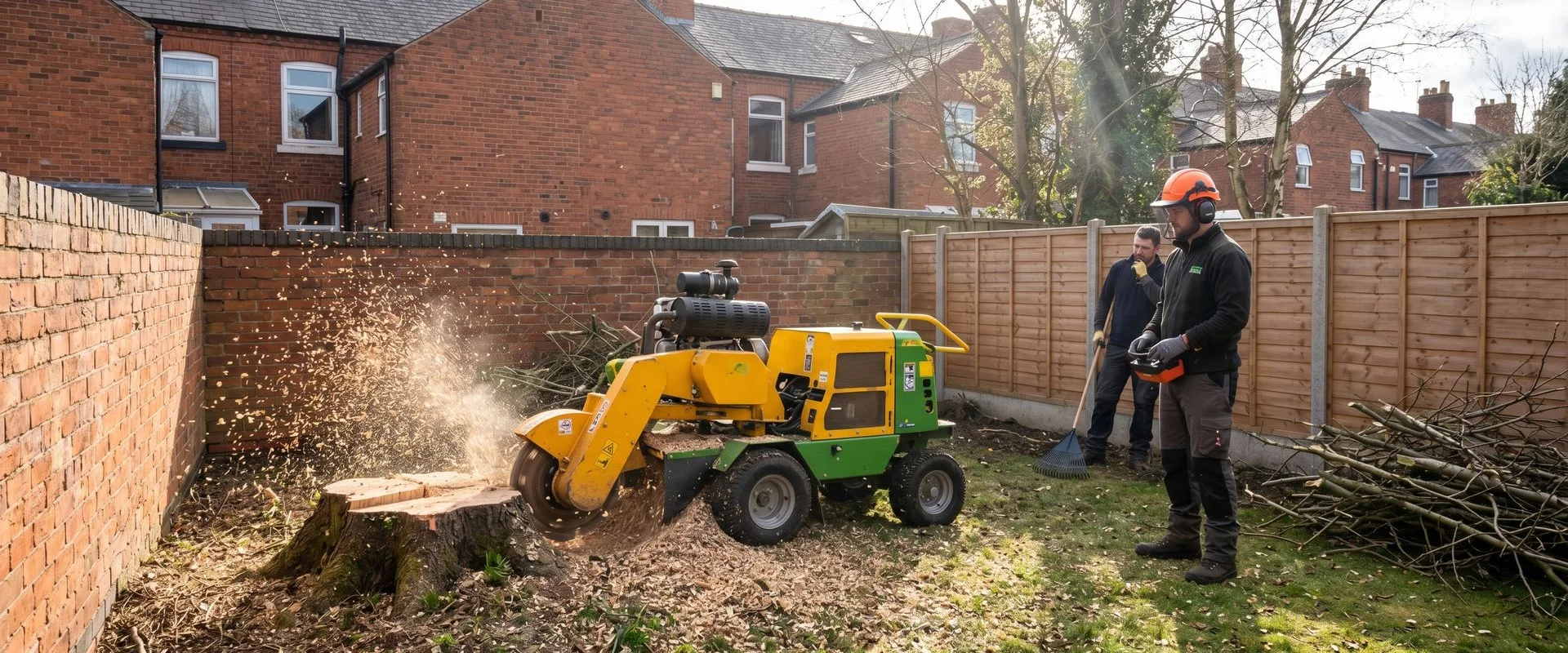
- Full removal (standard rate, scheduled later): the cleaner finish. Sectional tree removal of the remaining stem, stump grinding if needed, full arisings clearance, written report.
You only pay emergency rates for the actual emergency. The clean-up follows at the same price as a planned removal. We’ll be clear about what’s in each bucket before we start.
Power lines, DNO and what to do first
If a tree has fallen onto, or is touching, an overhead power line:
- Stay back: at least 10 metres in any direction. Lines can be live even if they look slack.
- Call your DNO on 105: Western Power Distribution covers most of Warwickshire. They isolate the line before any tree work can safely happen.
- Then call us: once the line is isolated and confirmed dead, we’ll take down the tree section that’s contacting the conductor.
We will not put a climber or a MEWP near a conductor that hasn’t been confirmed isolated. No exceptions.
Insurance reports, what we provide
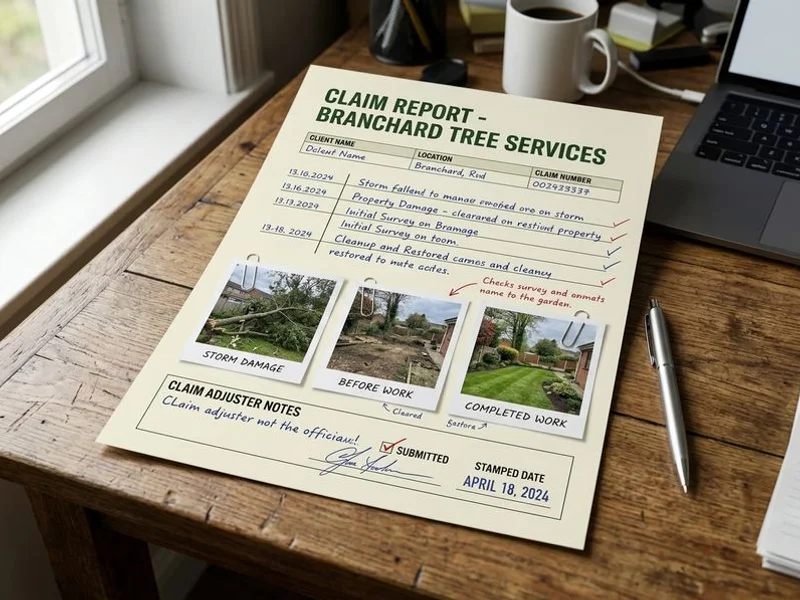
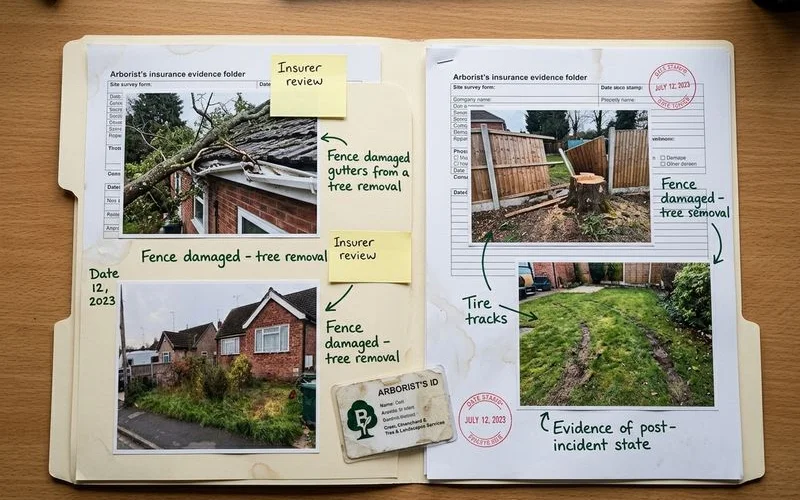
After every emergency callout, we provide a written report formatted to support your home insurance claim. The report includes:
- Photographic evidence: before, during and after photos with timestamps
- Tree identification: species, approximate age, structural condition
- Failure assessment: root-plate failure, stem failure, hanger, brittle limb
- BS3998 references: where relevant, citing the British Standard
- Work scope: what was done as made-safe, what remains for full removal
- Pricing breakdown: emergency-rate work vs scheduled-rate work, separated clearly
This is the document your insurer’s loss adjuster will want. Most claims process faster with this report attached, and we’ve never had one rejected for insufficient detail.
Pricing for emergency tree work
Emergency-rate work in Rugby usually runs:
- Made-safe callout (1–4 hours, weekday daytime): £350–£800
- Made-safe callout (out-of-hours, weekend, night): £550–£1,500
- Full removal afterwards (scheduled, standard rate): £250–£2,500
- Insurance report: included in callout cost
- DNO coordination: included where required
We’ll quote on the call where we can, and we’ll always be straight about whether the issue is genuinely urgent or whether it can safely wait.
If you’ve got a problem tree right now, call 07511 208277: we’ll get someone from the Branchard Rugby team to you fast.